

The Shift from Connected Devices to Truly Intuitive Homes
For years, the promise of the "smart home" felt somewhat fragmented. Early adopters spent hours configuring separate mobile apps, troubleshooting connectivity drops, and setting up complex manual rules just to get a single light bulb to turn on at sunset.
Technology was present in our living rooms, but it required constant management.
We have officially moved past the era of basic remote-controlled gadgets into an age of ambient, AI-driven home automation.
Modern smart home ecosystems no longer wait for manual button presses or rigid voice commands. Powered by edge-computing microprocessors, machine learning algorithms, and unified cross-platform standards like Matter, today's living spaces actively learn your daily routines. They adjust room temperatures based on occupancy, manage ambient natural light, optimize energy consumption, and keep floors spotless all seamlessly working in the background.
Here is how AI-driven smart gadgets are redefining modern living spaces and how you can build an automated home that balances high-tech efficiency with clean, contemporary aesthetics.
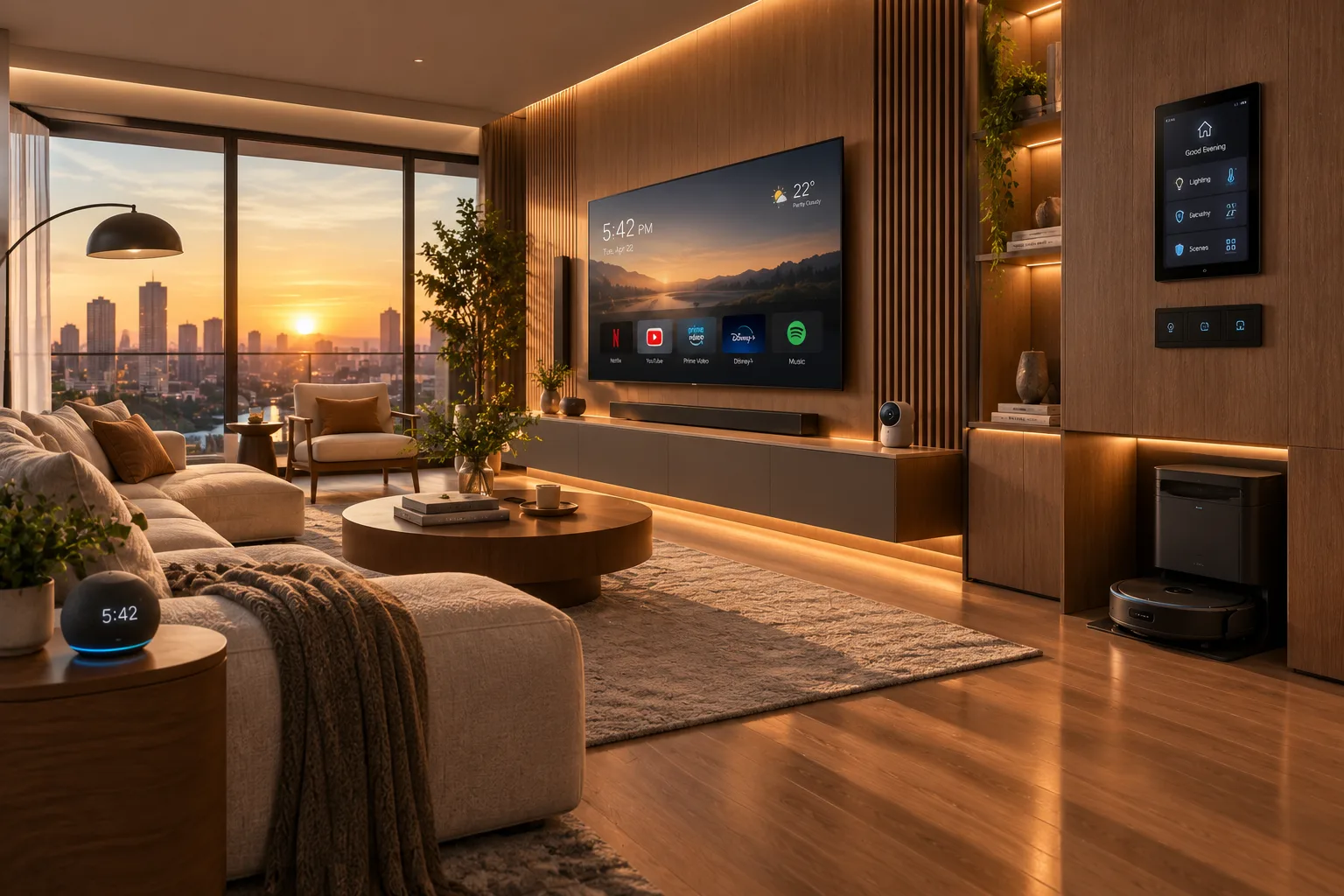
1. The Central Brain: Unified Smart Hubs and Generative AI Assistants
Every seamless smart home relies on a central command system to process data, manage device schedules, and execute automated routines.
While legacy smart hubs acted simply as signal routers, next-generation AI hubs function as proactive home managers. Rather than executing strict "if-this-then-that" commands, these systems analyze multi-sensor data across your home to make context-aware decisions.
Key Capabilities of Modern AI Home Brains:
Contextual Presence Detection: By combining millimeter-wave (mmWave) radar sensors with ultra-wideband location tracking, modern hubs recognize not just whether a room is occupied, but who is in the room and what activity they are engaged in.
Proactive Energy Management: AI algorithms monitor local utility pricing curves, solar energy generation, and weather forecasts to run high-energy appliances during off-peak hours, dramatically reducing monthly utility bills.
Unified Cross-Brand Connectivity: Universal connectivity protocols allow smart devices across different brand ecosystems to communicate locally without relying on external cloud servers, increasing response speeds and protecting household data privacy.
2. Intelligent Lighting & Automated Window Shades
Lighting dictates the energy, mood, and visual aesthetics of any interior space. AI-powered lighting systems go far beyond changing colors on command—they align your indoor environment with natural human biology.
Circadian Rhythm Automation
Modern dynamic LED arrays automatically shift their color temperature throughout the day. In the morning, lights output a crisp, cool white spectrum to promote focus, alertness, and cortisol regulation. As evening approaches, the system smoothly transitions toward warm, amber tones that encourage melatonin production and deeper sleep.
Retrofit Window Automation
Window treatments play a crucial role in indoor climate management. Automated curtain and roller blind drivers sync with indoor temperature sensors and external sunlight angles. During hot afternoon hours, shades automatically lower to block direct thermal heat, reducing air conditioning workloads. In winter, they open fully to capture passive solar warmth.
3. Climate Precision: Smart Thermostats & Micro-Zone Comfort
Traditional central thermostats measure temperature at a single wall location—often leading to uneven cooling, hot bedrooms, and wasted energy in empty rooms.
AI climate control introduces micro-zone management by placing low-profile wireless temperature and humidity sensors in every high-use room.
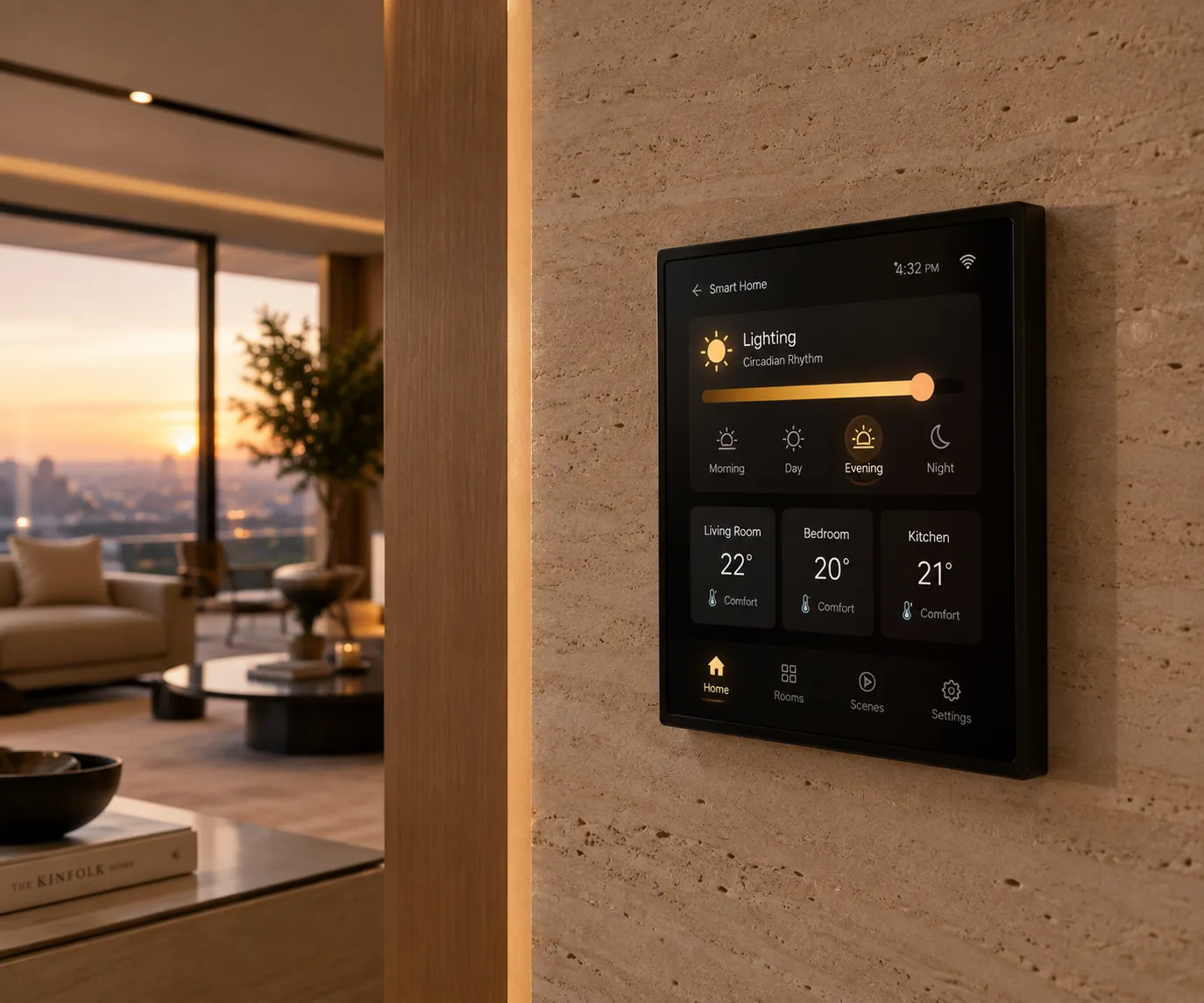
How AI Elevates Indoor Climate
Predictive Pre-Cooling & Heating: Instead of maintaining a fixed temperature 24/7, smart climate systems learn how long your home takes to warm up or cool down based on outdoor humidity, wind speed, and insulation efficiency.
Occupancy-Based Airflow Routing: Smart motorized air vents direct heating or cooling exclusively to occupied spaces, turning off airflow to guest rooms or home offices after work hours.
Air Quality Monitoring: Integrated VOC and particulate sensors automatically activate HEPA air purifiers or fresh-air exchangers whenever cooking fumes, dust, or outdoor pollen levels spike.
4. Hands-Free Floor Care: Autonomous Vacuum & Mop Ecosystems
Routine floor maintenance used to consume hours of weekend chore time. Modern robot vacuum and mopping stations have evolved into fully autonomous floor-care appliances that blend seamlessly into home cabinetry.
Autonomous Floor Care Evolution
Navigation System: Transitioned from random bump-and-bounce sensors to high-precision LiDAR and AI camera vision.
Obstacle Recognition: Modern units identify and navigate around shoes, power cords, and pet toys in real time instead of getting tangled.
Mopping Capability: Upgraded from static wet cloth dragging to dual spinning, heated mop pads that scrub stubborn stains.
Base Station Automation: Docks now handle automatic dustbin emptying, dirty mop pad washing, clean water refilling, and hot-air drying to prevent mold.
Key Innovations in Automated Cleaning
AI Visual Obstacle Avoidance: RGB cameras paired with neural processing networks allow cleaning robots to identify and steer around unexpected obstacles—such as charging cables, pet toys, and furniture legs—in real time.
Auto-Lifting Mop Plates: When transitioning from hardwood or tile over to plush living room rugs, smart units instantly lift their wet mopping pads to keep carpet fibers completely dry.
Self-Maintaining Multifunction Docks: Advanced dock stations automatically empty collected dust into sealed bags, wash dirty mop pads with hot water, refill onboard clean water reservoirs, and blow hot air across mop pads to prevent mold and odor.
Essential Smart Gadgets to Upgrade Your Living Space
Building an automated home does not require an immediate top-to-bottom renovation. You can start with key high-impact upgrades:
Universal Smart Hub: A central hub supporting cross-brand communication protocols to link lighting, sensors, and media systems.
Matter-Compatible Smart Switches: Retrofit wall switches or plug adapters that bring legacy lamps, floor fans, and decorative lighting into automated schedules.
Multi-Sensor Room Pods: Compact wireless sensors that measure motion, ambient light, room temperature, and humidity for hyper-targeted automation routines.
Automated Robot Vacuum & Mop Combo: A hands-free floor cleaner with a self-emptying and mop-washing dock to maintain hard floors daily.
Practical Habits for a Reliable Smart Home
To keep your automated living space running smoothly without tech fatigue, follow these core principles:
Prioritize Local Control: Choose devices that can execute basic lighting and climate routines locally within your home network even if your main internet connection experiences an outage.
Keep Physical Controls Accessible: Ensure that every smart light fixture can still be operated by a standard wall switch or physical button so guests and family members do not need an app to turn on a light.
Set Up Simple "Goodnight" and "Goodbye" Scenes: Create master routines that turn off all interior lights, adjust thermostats, lock smart deadbolts, and arm security systems with a single tap or voice phrase.